
Dominick’s Emergence from His Twin’s Shadow
I Know This Much Is TrueDominick moves from defining himself through comparison, rivalry, and responsibility for Thomas toward acknowledging his own grief, limitations, and capacity for connection.
increasing Bearing strength in each event
 decreasing
Bearing strength in each eventdecreasingThe Protective Rival
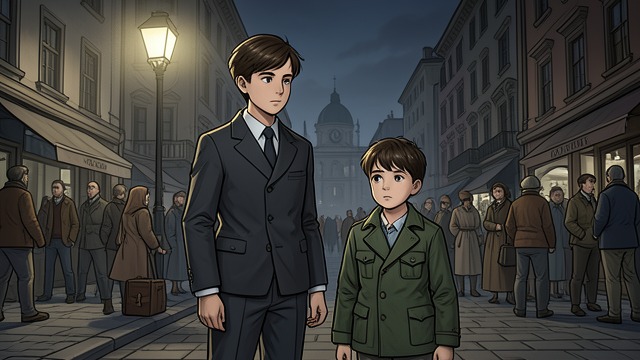
The Protective Rival
A role inside the family
As a boy, Dominick learned to anticipate Ray’s anger and to survive by knowing when to keep quiet and when to push back. Thomas, more sensitive to Ray’s bullying, became the apparent weaker twin; Dominick’s relative safety brought relief, but also guilt.
The brothers were inseparable in public and divided in private. Their mother, Ma, often cherished Thomas as her “little bunny rabbit,” while Dominick competed for recognition and made the differences between them into a source of pride.
The cost of protection
Dominick sometimes defended Thomas, but he also mocked, outmaneuvered, and abandoned him. When he later recalled those years, he recognized that his role as protector had never been purely generous: it also helped him avoid facing his own vulnerability and anger.
The Attempted Escape
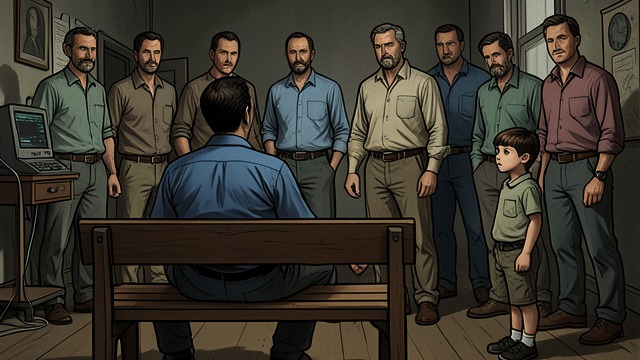
The Attempted Escape
Separating from Thomas
After a difficult freshman year, Dominick arranged to room with Leo rather than Thomas. He delayed telling his twin, partly because he dreaded Thomas’s reaction and partly because he wanted a life that did not revolve around his brother’s needs.
The summer work crew briefly offered that freedom. Dominick bonded with Leo and Ralph, smoked marijuana with them, and let Thomas become the outsider. When Dell humiliated Thomas, Dominick failed to intervene; when Thomas quit, Dominick left rather than face the rupture between them.
A separation that did not free him
Thomas’s increasingly disorganized behavior and the discovery of his poor college performance made it clear that Dominick’s escape could not settle what was happening. Even as he pursued his own relationship and ambitions, he remained entangled in his brother’s crisis and in guilt about the moments when he had chosen distance.
Grief and Self-Destruction
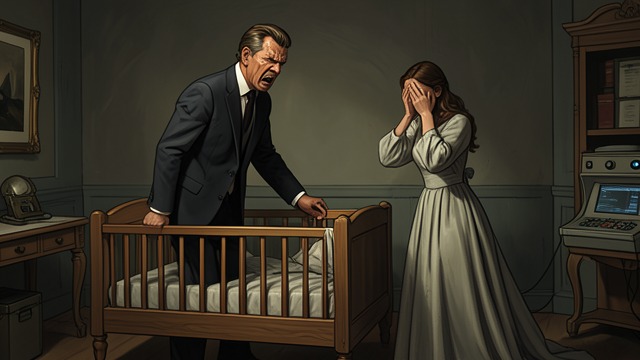
Grief and Self-Destruction
Losing a daughter
Dominick found his infant daughter Angela dead in her bassinet. He responded by taking charge of practical arrangements while avoiding the grief that Dessa was trying to face. He could not bear the support group, could not comfort her when she mourned, and eventually had a vasectomy without telling her.
The decision was an attempt to regain control after a loss he could not control. For Dessa, it revealed how far he had withdrawn from their marriage and from the possibility of a shared future. She left, saying that his anger made it impossible for her to breathe.
Repeating the damage
Dominick later saw that his anger did not protect him from pain; it isolated him and damaged the people he loved. He carried the failed marriage, Angela’s death, and the recurring reach for his absent biological father as unfinished business, even while insisting that the past was over.
The Failed Rescue
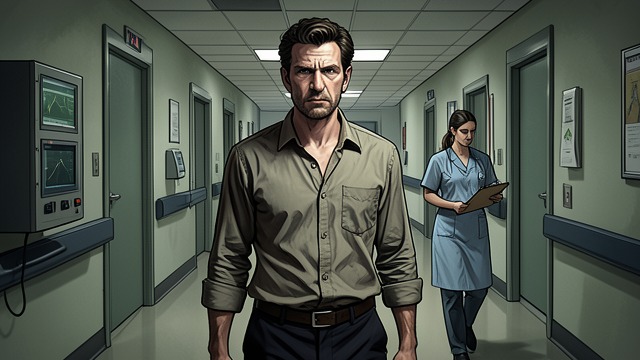
The Failed Rescue
Trying to save Thomas
After Thomas amputated his hand, Dominick refused the surgeon’s proposal to attempt reattachment because he believed Thomas had the right to control his own body. When Thomas was transferred from Settle to Hatch, Dominick fought the placement, challenged staff, and suffered a guard’s assault.
Dominick’s advocacy was loving but also consuming. He treated each institutional decision as something he might reverse if he argued hard enough, and he struggled to accept that Thomas’s illness and the state’s procedures lay beyond his control.
The burden becomes visible
At meetings with Dr. Patel and Lisa Sheffer, Dominick finally voiced the fear beneath his determination: that Thomas was his anchor and that he himself might become mentally ill. Therapy drew out the anger, guilt, and grief he had long kept under control, including the knowledge that he had not always protected Thomas.
When Dominick missed Thomas’s review hearing after falling from Henry Rood’s roof, he believed he had failed his promise to Ma. Thomas remained at Hatch, and Dominick had to confront the limits of a rescue effort that could not guarantee his brother’s safety or recovery.
A Life Rebuilt in Inheritance
A Life Rebuilt in Inheritance
Loss and responsibility
After Thomas’s death, Dominick publicly confronted Ray about the family’s past and the ways Ray had treated the twins. He also learned that Ray had been visiting him in the hospital and later discovered that Ray, not a distant stranger, had raised him despite their painful history.
Dominick faced another test of responsibility when Joy disclosed her HIV status and asked him to care for her daughter, Tyffanie. Unable at first to promise that future, he eventually became Tyffanie’s adoptive father, sharing a family with Dessa again.
Making room for the past
Dominick returned to therapy and began reading Domenico’s recovered history. The manuscript did not provide a simple answer to family suffering, but it forced him to examine how resentment, silence, and inherited behavior shaped his own life.
He and Dessa remarried, and Dominick later converted the Hollyhock Avenue house into a women’s and family shelter. He did not erase what had happened; instead, he began to understand that caring for others did not require denying his own pain or pretending that he could control every outcome.
childhood at 68 Hollyhock Avenue
summer 1969 and the return to the University of Connecticut
1983 through the end of Dominick’s marriage to Dessa
October 1990 through the following spring
after Thomas’s death and into the mid-1990s
